
By Premier Fire, Reviewed by Matt Haiman, Owner
A commercial fire alarm installation is the engineered process of designing, permitting, installing, programming, and certifying a life safety system that detects fire conditions and alerts occupants and first responders. In South Florida, the work follows seven steps: site assessment and risk survey, engineered design and AHJ permitting, equipment selection, rough-in and device installation, programming and integration, acceptance testing and AHJ inspection, and owner training leading to certificate of occupancy.
What is a commercial fire alarm installation?
A commercial fire alarm installation is a code-driven life safety project. Your system has to detect smoke, heat, or flame, notify everyone inside the building, signal a monitoring center, and in many cases trigger other building systems like elevators, doors, and HVAC. The whole process is governed by NFPA 72, the national standard for fire alarm and signaling systems.
Commercial systems are different from residential systems in almost every way that matters. Residential alarms protect a small footprint, run on simple wiring, and rarely tie into other building infrastructure. Commercial systems cover larger square footage, use addressable panels that pinpoint device-level events, integrate with mass notification, and require sealed engineering drawings, permits, and an Authority Having Jurisdiction (AHJ) inspection before they can be turned over.
If you own or manage a building in Broward, Miami-Dade, Monroe, or Palm Beach County, the project will touch electrical, mechanical, and life safety trades. That is why commercial fire protection is treated as its own discipline, not a general electrical task.
A step-by-step look at a commercial fire alarm installation
Every project we have run for over 20 years has followed the same backbone, even when the building type changes. The order matters because each step locks in decisions that the next one depends on. Skipping the survey leads to a design that does not fit. Skipping permitting leads to a system the AHJ will not accept. Skipping training leaves your staff unable to silence a panel during a real event.
Below is the seven-step sequence we use on warehouses, office buildings, apartment complexes, schools, retail stores, municipal buildings, condominiums, high-rise buildings, mixed-use, and multi-tenant projects across South Florida. Each step has a specific deliverable and a specific person who signs off before the next step begins.
Step 1: Site assessment and risk survey
The first visit is a walkthrough with your facility team. We document the existing conditions, the building’s use and occupancy classification, ceiling heights, plenum spaces, hazardous areas, and any existing fire alarm or sprinkler infrastructure. For retrofits, we map every existing device, panel, and circuit so we know what stays and what comes out.
We also identify the AHJ for your jurisdiction, because the local fire marshal’s interpretation of the code can shape the design. A high-rise in downtown Miami has different requirements than a strip retail center in Coconut Creek. We look for survivability concerns, hard-to-reach spaces, and any radio coverage gaps that might call for a Bi-Directional Amplifier (BDA) later in the project.
The deliverable from Step 1 is a written scope of work, a device count, and a list of code triggers your project will need to address. This is the document we use to build a fixed proposal so you are not guessing at scope changes later.
Step 2: Engineered design and AHJ permitting
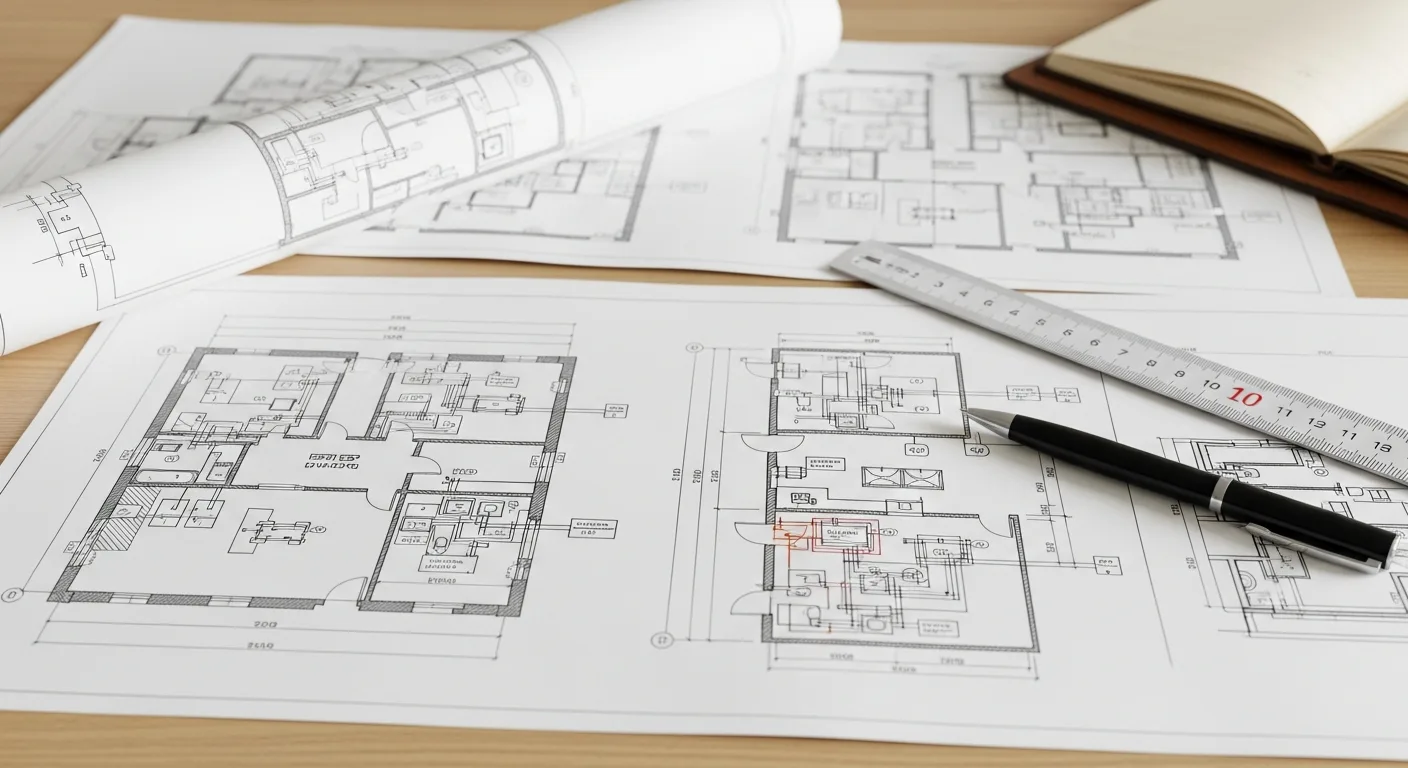
With the survey complete, our design team produces sealed engineering drawings. The drawings show every device, every circuit, riser diagrams, battery calculations, voltage drop calculations, and the panel programming matrix. They are stamped by a licensed Florida engineer where the AHJ requires it, which is most jurisdictions for new construction and major renovations.
We submit the package to the AHJ on your behalf. In Broward County and Miami-Dade County, the review process can include both the local building department and the fire marshal’s office. We answer review comments, revise drawings, and resubmit until the permit is issued. For complex occupancies, an engineered life safety system may be required, which adds a performance-based design layer to the standard prescriptive code path.
Permits take time. Building that time into your overall project schedule is the difference between hitting your certificate of occupancy date and missing it.
Step 3: Equipment selection
Once the permit is in hand, we order equipment. We are factory-trained on the major commercial fire alarm platforms, including Notifier, Fire Lite, Simplex, Silent Knight, Mircom, EST, Potter, Rath, and Siemens. The brand we recommend depends on your building type, your existing infrastructure, your monitoring preference, and how the system will need to expand in the future.
Addressable systems are standard for most new commercial work. They identify each device individually, which speeds up troubleshooting and gives your monitoring center precise location data when an alarm trips. Conventional systems still have a place in smaller buildings or in straight retrofits where the existing wiring will not support an addressable upgrade.
We also select notification appliances, smoke and heat detectors, manual pull stations, duct detectors, control modules, and the panel itself. Every component has to be UL 864 listed for fire alarm service. We will not install equipment that is not listed for the application, even if a client asks.
Step 4: Rough-in and device installation
Rough-in is the wiring phase. Our technicians pull fire alarm cable in conduit or in approved free-air assemblies, depending on the building. Survivability requirements under NFPA 72 dictate which circuits need fire-rated cable and how the wiring has to be supported and protected. We coordinate with the general contractor and the other trades so our work happens in the right sequence.
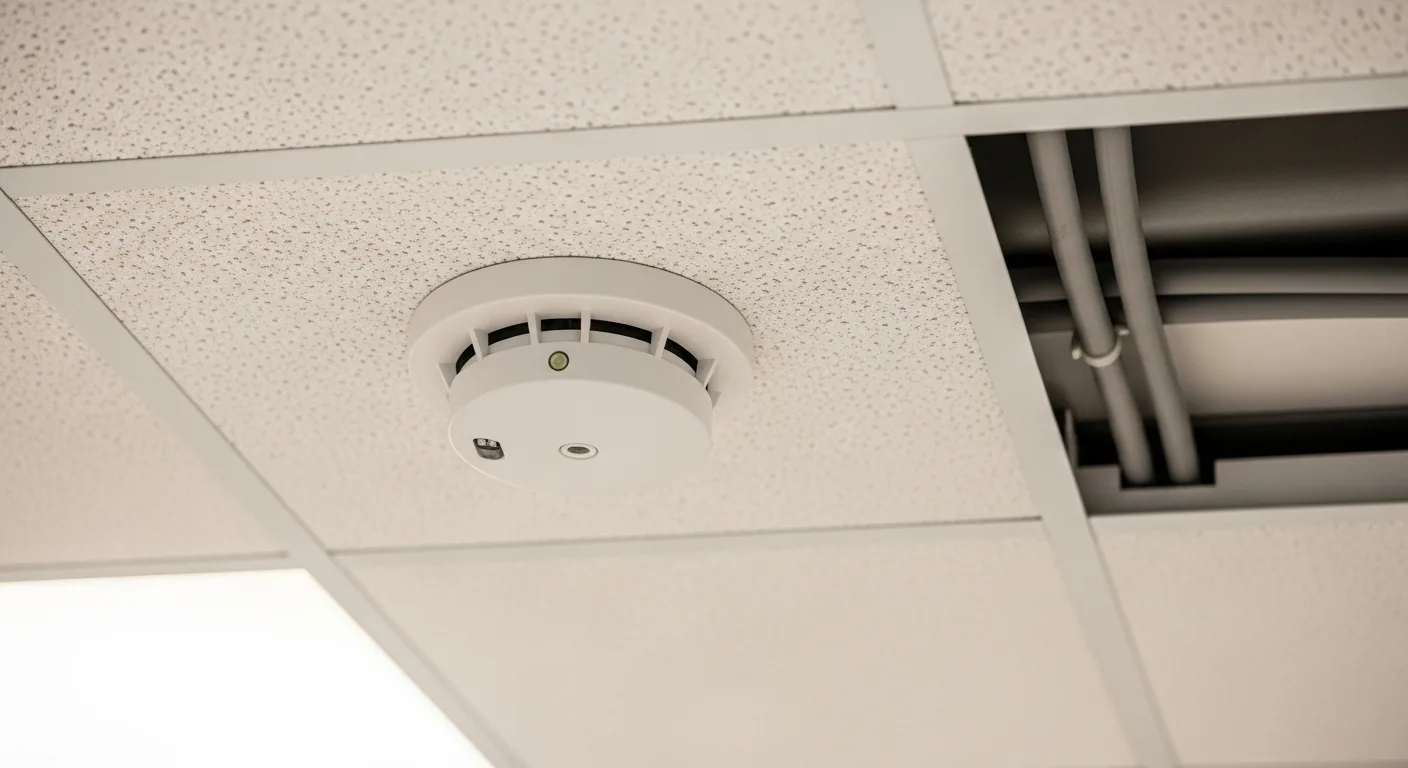
Device installation follows once the building is closed in and ceilings are ready. Smoke detectors, heat detectors, pull stations, horns, strobes, speakers, and control modules all get mounted at the locations shown on the approved drawings. Mounting heights for visible notification appliances are dictated by ADA and NFPA 72, and the AHJ will measure them during inspection.
For occupied retrofits, we phase the work so your tenants keep functional life safety coverage during the transition. We never leave a building without working detection, even temporarily.
Step 5: Programming and integration
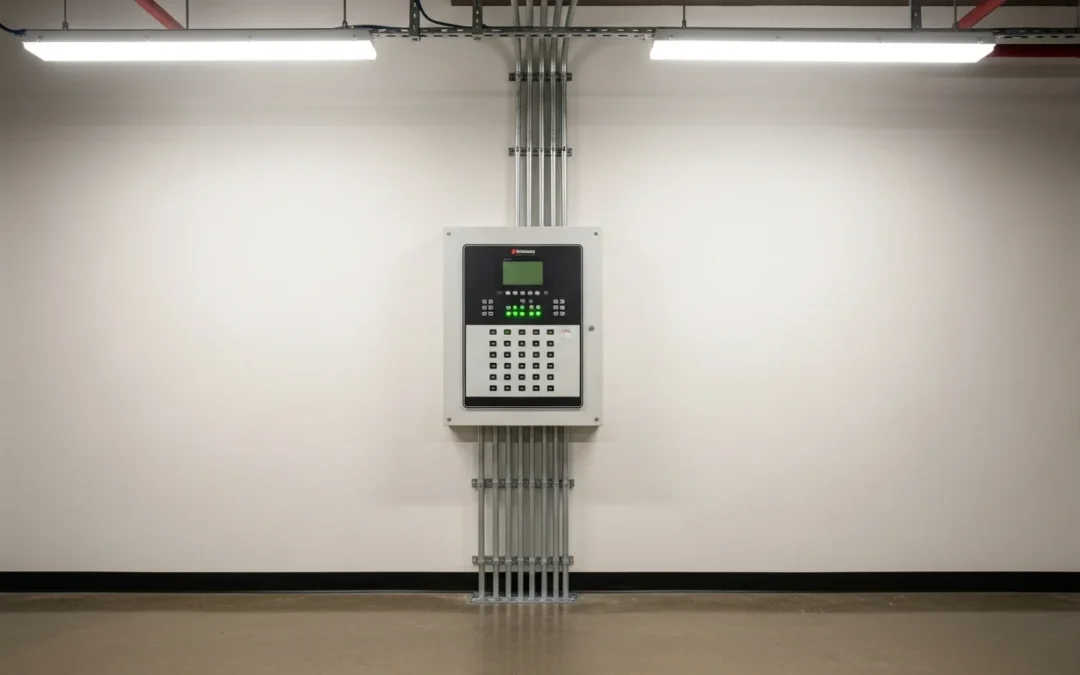
Programming is where the system becomes a system instead of a collection of devices. We program every device into the panel, build the cause-and-effect matrix that tells the panel what to do when each device activates, and configure communication paths to the monitoring center. Integration is the part most building owners underestimate.
A commercial fire alarm panel often has to talk to other building systems. Elevator recall sends cars to a designated floor when smoke is detected in an elevator lobby or machine room. HVAC shutdown stops the spread of smoke through ductwork. Magnetic door holders release so smoke and fire doors close. If your building has weak radio coverage for first responders, a BDA or ERRCS system ties into the fire alarm panel for power supervision and trouble reporting.
Every integration point is tested before we call for inspection.
Step 6: Acceptance testing and AHJ inspection
Before the AHJ visits, we conduct a full pre-test. Every device on the system gets activated and verified. Every notification appliance gets sound and candela measurements. Every integration point gets exercised. We document everything on a Record of Completion form, which is required under NFPA 72.
The AHJ inspection is a witnessed retest. The fire marshal’s inspector arrives, and we walk the building activating devices while they verify the panel response, the audible and visual notification, and the integration with elevators, HVAC, and any other tied-in systems. They check mounting heights, spacing, and labeling.
If the system passes, the inspector signs off. If it fails, we correct the deficiencies and call for a reinspection. We work hard to pass on the first visit, because reinspection delays your occupancy.
Step 7: Owner training and certificate of occupancy
The final step is turning the system over to you. We train your facility staff on panel operation: how to silence an alarm, how to acknowledge a trouble signal, how to test a device, and how to read the event history. We hand over the Record of Completion, the as-built drawings, the operation and maintenance manuals, and the warranty documentation.
With the AHJ sign-off in hand, your building can receive its certificate of occupancy. We also set up your monitoring account if Premier is providing central station service, and we schedule your first annual inspection so the system stays compliant under 29 CFR 1910.165 and Florida Statutes §633.348.
This is the point where most contractors disappear. We stay on as your inspection and service partner for the life of the system.
How long does a commercial fire alarm installation take?
Timeline depends on building size, system complexity, the AHJ’s review queue, and whether your project is new construction or a retrofit of an occupied building. Permitting alone can run several weeks before any installation work begins. Once the permit is issued, fieldwork moves faster on new construction than on retrofits, because the building is open and accessible.
The table below shows typical durations from kickoff to AHJ acceptance for the building types we install most often in South Florida. These are realistic ranges, not best-case scenarios.
| Building type | Typical timeline (weeks) |
|---|---|
| Small commercial (under 10,000 sq ft) | 4 to 6 weeks |
| Mid-rise (10 to 30 stories) | 10 to 16 weeks |
| High-rise (30+ stories) | 16 to 28 weeks |
| Healthcare | 14 to 22 weeks |
| K-12 school | 8 to 14 weeks |
Retrofits in occupied buildings sit at the longer end of each range because we phase the work to keep tenants protected. New construction usually lands in the middle. If your project has a hard deadline (a lease commitment, a school year start, a tenant move-in), tell us at the kickoff meeting so we can build the schedule backwards from that date.
Permits, AHJ, and Florida-specific code requirements
Florida is one of the most code-intensive states in the country for fire alarm work. The 8th Edition (2023) Florida Fire Prevention Code took effect on December 31, 2023, and it adopts NFPA 1 (2021) and NFPA 101 (2021) by reference, with Florida-specific amendments. The Florida Building Code governs the structural and electrical aspects of the installation. NFPA 72 is the design and installation standard for the fire alarm itself.
The AHJ is the office that interprets and enforces these codes for your property. In Broward County, that is usually the local municipal fire marshal working with the Broward County Building Code Services Division. In Miami-Dade County, jurisdiction may sit with the Miami-Dade Fire Rescue Department or with the city fire marshal where your building is located. Monroe County has its own structure, with separate AHJs in Key West, Marathon, Layton, Key Colony Beach, and the Village of Islamorada. Palm Beach County has yet another set of municipal AHJs.
The AHJ has the final word on what your system needs. Two buildings of identical size and use can end up with different requirements based on local interpretation. We deal with these offices every week, and we know how each one reads the code. If your project sits in unfamiliar territory or you need help interpreting which code edition applies to your scope, our fire code consulting service can resolve those questions before they become permit denials.
How to choose a licensed Florida fire alarm contractor
Choosing the right contractor is its own decision. Florida Statutes §633.346 and §633.3482 set the licensing requirements for fire protection contractors, and not every electrical or low-voltage company holds the right credentials. Verify the license, the insurance, the factory training on your equipment platform, and the local AHJ relationships before you sign anything. For a deeper walkthrough, read our complete guide to choosing a Florida fire alarm contractor.
After installation: monitoring, inspection, and maintenance
Installation is the start of the system’s life, not the end. Once your fire alarm is online, three ongoing programs keep it compliant and functional: monitoring, inspection, and maintenance.
Monitoring connects your panel to a UL-listed central station that dispatches the fire department when an alarm trips. The communication path can be cellular, IP, or a combination, and the right choice depends on your building, your insurance carrier’s requirements, and your AHJ’s preferences. You can compare fire alarm monitoring options to see how the paths differ in reliability, cost structure, and code acceptance.
Inspection is required by NFPA 72, NFPA 25 (for sprinkler integration), and Florida Statutes §633.348. Most commercial systems require quarterly, semi-annual, or annual testing depending on the device type. Our fire alarm inspection program handles the full cycle and keeps your records ready for AHJ audits.
Maintenance covers everything between inspections: trouble calls, device replacements, firmware updates, panel battery swaps, and code-driven upgrades. Our fire alarm service team is on call for emergency response across South Florida, with technicians dispatched from our Fort Lauderdale office.
Industries we install fire alarm systems for
We have installed and serviced fire alarm systems across nearly every commercial property type in South Florida for over 20 years. The codes change with the occupancy, and the system design changes with them. A warehouse needs spot detection in high-bay spaces. A school needs voice evacuation tied to classroom signaling. A high-rise needs survivable circuits and stairwell pressurization control.
- Warehouses and distribution centers
- Office buildings
- Apartment complexes
- Schools and educational facilities
- Retail stores and shopping centers
- Municipal buildings
- Condominiums
- High-rise buildings
- Mixed-use developments
- Multi-tenant commercial properties
You can see examples of completed projects in our project portfolio.
Service areas across South Florida
Premier Fire serves Miami-Dade, Broward, Monroe, and Palm Beach counties. Our crews work daily in Miami, Fort Lauderdale, Hallandale, Coconut Creek, Palm Beach, and across the Florida Keys. We have dedicated coverage for Broward County, Key West, Marathon, Layton, Key Colony Beach, and the Village of Islamorada. If you are not sure whether your property falls inside our service area, call us and we will confirm before you spend time on a quote request.
Frequently asked questions
Do I need a permit to install a fire alarm in Florida?
Yes. Commercial fire alarm installations require a permit from the local AHJ in every Florida jurisdiction. Sealed engineering drawings, equipment cut sheets, and battery calculations are typically part of the submittal package. The permit must be issued before any wiring or device installation begins, and the system cannot be energized for use until the AHJ inspects and signs off.
How long does a commercial fire alarm installation take?
Most small commercial buildings under 10,000 square feet take 4 to 6 weeks from kickoff to AHJ acceptance. Mid-rise projects run 10 to 16 weeks, and high-rise buildings can take 16 to 28 weeks. Permitting timelines, equipment lead times, and whether the building is occupied during the work all affect the schedule.
What’s the difference between addressable and conventional systems?
Addressable systems identify each device individually, so the panel reports the exact location of an alarm or trouble. Conventional systems group devices onto zones, so you know the area but not the specific device. Most modern commercial installations use addressable panels because they speed up troubleshooting and improve emergency response accuracy.
Do I have to replace my whole system or can it be retrofitted?
It depends on the existing equipment, the wiring condition, and the current code requirements. Many older panels can be replaced while keeping existing wiring and devices, which saves time and reduces tenant disruption. We assess the existing infrastructure during Step 1 and tell you whether a partial retrofit will meet code or whether a full replacement is required.
Who is the AHJ for my property?
The AHJ is the local fire marshal’s office with jurisdiction over your building. In incorporated cities, that is usually the city fire department. In unincorporated areas, it is the county fire marshal. Monroe County, Broward, Miami-Dade, and Palm Beach all have multiple AHJs depending on your exact address. We confirm the correct AHJ before any design work begins.
Can the same contractor handle BDA and ERRCS at the same time?
Yes, and it is usually the right approach. A Bi-Directional Amplifier or Emergency Responder Radio Communication System has to integrate with the fire alarm panel for power monitoring and trouble reporting. Doing both projects with one contractor avoids coordination gaps, single-points-of-failure during commissioning, and finger-pointing if something fails inspection.
Is the installation disruptive to tenants?
Less than most owners expect. We phase work in occupied buildings to keep functional life safety coverage at all times. Loud testing happens during off-hours when possible, and we coordinate with property management on tenant notifications. Most office and residential occupants barely notice the work outside of brief horn and strobe testing windows.
How is a new system tested for AHJ acceptance?
We perform a full internal pre-test first, activating every device and verifying every notification appliance and integration point. Then the AHJ inspector arrives for a witnessed retest. They confirm panel response, audible and visual notification levels, mounting heights, labeling, and any tied-in systems like elevator recall. The Record of Completion form is signed at acceptance.
Does Premier Fire handle elevator recall and HVAC shutdown integration?
Yes. Both are standard parts of a commercial fire alarm installation when the building has elevators or central HVAC. We program the cause-and-effect matrix in the panel, install the control modules, and coordinate with your elevator and mechanical contractors to verify the integration during acceptance testing. The AHJ tests these functions as part of the inspection.
Is Premier Fire licensed and insured?
Yes. Premier Fire is licensed and insured under Florida Statutes §633.346 and §633.3482, and we carry the credentials required by every AHJ in our service area. We have served South Florida for over 20 years, and our technicians are factory-trained on the major commercial fire alarm platforms we install.
Schedule a free consultation
If you are planning a new commercial fire alarm installation, a retrofit, or a code-driven upgrade, we can walk your building, identify the requirements, and put a clear scope in front of you. Call our Fort Lauderdale office at (954) 404-7137 or visit us at 2860 W State Rd 84 Suite 118, Fort Lauderdale, FL 33312. You can also reach our team through the contact page, and we will respond within one business day to schedule your site visit.